
Buddha Biography, Teachings, Enlightenment, Eightfold Path, Nirvana & Complete Life Story Guide

Share
Introduction
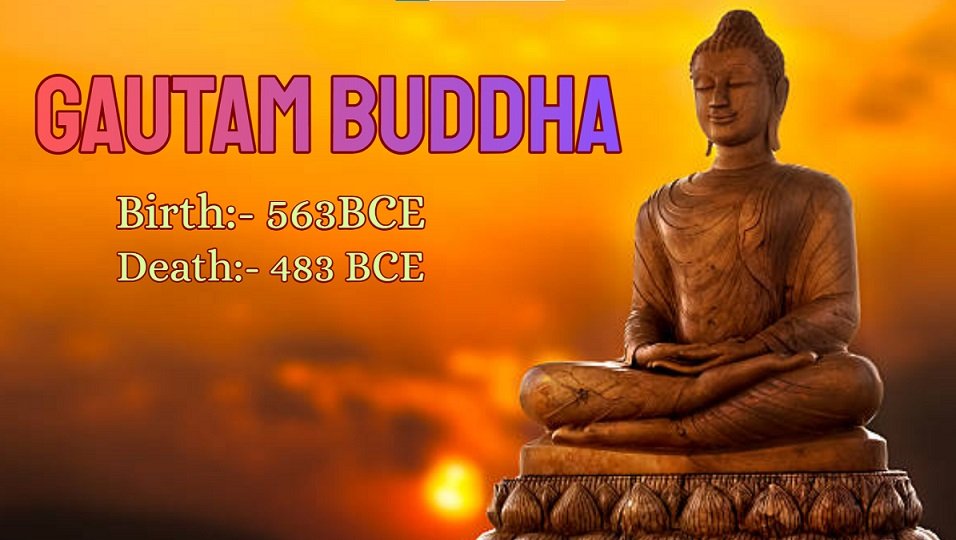
Gautam Buddha, commonly referred to as Budha or Buddha, is one of the most influential non secular leaders in global records. He primarily based Buddhism, a course of non secular development that has guided hundreds of thousands of human beings closer to internal peace and enlightenment for over 2,500 years. Born as Siddhartha Gautama in historic India, Buddha’s existence adventure from a royal prince to an enlightened trainer is one of the most inspiring modifications ever recorded. His teachings cognizance on overcoming struggling, understanding reality, training compassion, and attaining Nirvana.
This comprehensive article explores the lifestyles of Gautam Buddha, his enlightenment, center teachings, philosophy, disciples, historical effect, and the spread of Buddhism internationally, collectively with distinct tables and mounted information for higher know-how.
Gautam Buddha Quick Information Table
| Category | Details |
|---|---|
| Birth Name | Siddhartha Gautama |
| Known As | Buddha, Shakyamuni |
| Birth Year | c. 563 BCE |
| Birthplace | Lumbini (Present-day Nepal) |
| Father | King Suddhodana |
| Mother | Queen Maya |
| Wife | Yasodhara |
| Son | Rahula |
| Enlightenment Age | 35 Years |
| Place of Enlightenment | Bodh Gaya |
| Religion Founded | Buddhism |
| Death (Mahaparinirvana) | c. 483 BCE |
| Place of Death | Kushinagar |
Early Life of Budha
Gautam Buddha end up born as Siddhartha Gautama in Lumbini, which is now placed in cutting-edge-day Nepal. At the time, it have become part of ancient India. His father, King Suddhodana, become the ruler of the Shakya extended family. According to lifestyle, sages expected that Siddhartha may each come to be a outstanding king or a brilliant religious instructor. His father wanted him to turn out to be a effective ruler, so he shielded him from all varieties of struggling and unpleasant realities of life. Siddhartha grew up in costly, surrounded through the usage of wealth, comfort, and protection.
He married Yasodhara at a younger age and later had a son named Rahula. Despite having the whole thing, Siddhartha felt a deep experience of dissatisfaction and interest approximately life beyond the palace walls.
The Four Sights and Renunciation
At the age of 29, Siddhartha ventured out of doors the palace and witnessed what are referred to as the Four Sights: an vintage man, a sick guy, a dull frame, and a wandering ascetic. These reviews deeply disturbed him. He realized that obtaining antique, infection, and demise are unavoidable factors of human existence. The sight of the ascetic inspired him to are searching for a spiritual method to struggling. That night time, Siddhartha made the existence-changing selection to go away his palace, wife, and child to search for reality. This occasion is known as the Great Renunciation. He reduce his hair, wore smooth gowns, and started out out his journey as a seeker of know-how.
Search for Enlightenment
Siddhartha studied beneath numerous religious instructors and practiced excessive asceticism for 6 years. He fasted appreciably and subjected himself to harsh bodily disciplines. However, he observed out that severe self-denial end up now not the path to proper facts. He then accompanied what he later referred to as the Middle Way, heading off every highly-priced and intense austerity. He sat under a Bodhi tree in Bodh Gaya and meditated deeply, determined now not to upward thrust till he observed enlightenment.
Enlightenment Under the Bodhi Tree
At the age of 35, Siddhartha attained enlightenment below the Bodhi tree. He understood the real nature of struggling and the course to liberation. From that second, he became the Buddha, which means “The Awakened One.” The region of his enlightenment is now referred to as Bodh Gaya, one of the maximum sacred pilgrimage websites for Buddhists worldwide. His enlightenment marked the start of his challenge to educate others the direction to freedom from struggling.
Core Teachings of Budha
Gautam Buddha’s teachings are sensible and focused on personal enjoy rather than blind perception. His philosophy is constructed on expertise struggling and finding a course to end it. The maximum essential teachings consist of the Four Noble Truths and the Eightfold Path.
The Four Noble Truths
| Truth | Explanation |
|---|---|
| First Noble Truth | Life involves suffering (Dukkha) |
| Second Noble Truth | Suffering is caused by desire (Tanha) |
| Third Noble Truth | Suffering can be ended |
| Fourth Noble Truth | The path to end suffering is the Eightfold Path |
The First Noble Truth explains that struggling exists in life, which encompass transport, growing older, illness, and demise. The Second Noble Truth identifies preference and attachment because the reason of suffering. The Third Noble Truth states that finishing preference ends in the give up of struggling. The Fourth Noble Truth introduces the Eightfold Path as the answer.
The Noble Eightfold Path
| Path Element | Meaning |
|---|---|
| Right View | Understanding reality correctly |
| Right Intention | Commitment to ethical improvement |
| Right Speech | Speaking truthfully |
| Right Action | Acting morally |
| Right Livelihood | Earning honestly |
| Right Effort | Developing positive states |
| Right Mindfulness | Awareness of body and mind |
| Right Concentration | Deep meditation |
The Eightfold Path courses individuals toward ethical conduct, intellectual subject, and expertise. It is taken into consideration the realistic roadmap to Nirvana.
Concept of Nirvana
Nirvana is the final goal in Buddhism. It represents freedom from struggling, preference, and the cycle of rebirth. It is not a place however a kingdom of final peace and enlightenment. Buddha taught that each person can advantage Nirvana via strength of will, meditation, and know-how.
Spread of Buddhism
After conducting enlightenment, Buddha spent approximately forty five years coaching across northern India. He attracted many lovers, which include kings, traders, and common people. His first sermon turn out to be brought at Sarnath. His teachings spread through disciples and later via rulers collectively with Ashoka, who accompanied Buddhism and promoted it all through Asia. Buddhism ultimately unfold to Sri Lanka, China, Japan, Tibet, Thailand, Myanmar, and lots of other nations.
Important Disciples of Gautam Buddha
| Disciple | Contribution |
|---|---|
| Ananda | Personal attendant of Buddha |
| Sariputta | Chief disciple known for wisdom |
| Mahakashyapa | Preserved Buddha’s teachings |
| Rahula | Buddha’s son and monk |
These disciples completed a vital position in keeping and spreading Buddha’s teachings.
Buddhist Scriptures
The teachings of Buddha had been preserved in texts referred to as the Tripitaka or Pali Canon. These scriptures contain discourses, monastic suggestions, and philosophical teachings. They are the foundation of Buddhist doctrine.
Major Buddhist Traditions
| Tradition | Region |
|---|---|
| Theravada | Sri Lanka, Thailand |
| Mahayana | China, Japan |
| Vajrayana | Tibet, Bhutan |
Each life-style interprets Buddha’s teachings in barely one-of-a-kind approaches however stocks middle thoughts.
Gautam Buddha’s Death and Mahaparinirvana
At the age of about eighty, Buddha passed away in Kushinagar. His dying is called Mahaparinirvana, this means that final liberation from the cycle of rebirth. His last words endorsed fans to keep training diligently.
Influence of Budha at the World
Gautam Buddha’s impact extends past religion. His teachings have impacted psychology, philosophy, ethics, and meditation practices international. Mindfulness meditation, derived from Buddhist teachings, is considerably practiced these days. His message of compassion and non-violence remains relevant in present day society.
Key Life Events Timeline
| Year (Approx.) | Event |
|---|---|
| 563 BCE | Birth in Lumbini |
| 534 BCE | Great Renunciation |
| 528 BCE | Enlightenment |
| 528 BCE | First Sermon |
| 483 BCE | Mahaparinirvana |
Why Buddha’s Teachings Matter Today
In in recent times’s stressful international, Buddha’s teachings offer sensible tools for peace and highbrow readability. Concepts like mindfulness, compassion, and detachment assist people control anxiety and emotional struggling. His teachings are everyday and now not confined to any person way of life.
Moral and Ethical Principles
Buddha emphasised moral living via the Five Precepts: now not killing, no longer stealing, fending off sexual misconduct, not mendacity, and fending off intoxicants. These thoughts guide ethical behavior and social concord.
Conclusion
Buddha’s lifestyles is a journey from expensive to enlightenment. He renounced worldly pleasures to seek fact and determined a course that has guided humanity for centuries. His teachings approximately struggling, compassion, and mindfulness hold to inspire tens of millions. From his enlightenment underneath the Bodhi tree to the spread of Buddhism throughout continents, Buddha’s legacy stays powerful and undying. His philosophy teaches that peace begins off evolved within and that real happiness comes from know-how and letting bypass. His lifestyles stands as a image of understanding, compassion, and spiritual awakening.