
For generations, real estate has been the one of the most trusted investments. It is the one asset class that offers a sense of stability that few other investments can match—something tangible you can see, touch, and hold. Yet, for all its stability, the traditional property market has long been defined by its exclusivity. Between high down payment and the Complex legal procedure’s , the barrier to entry has often felt difficult for the average person. But as our world moves toward a digital-first economy, those barriers and slowly decreasing. We are standing at the edge of a fundamental shift, moving away from slow, manual processes toward a more inclusive and streamlined way building long-term wealth.
Breaking Down the Barriers to Entry

The most profound change in this landscape is the rise of fractional ownership. In the past, the keys to a high-yield commercial plaza or a luxury residential complex were held only by institutional giants or very wealthy investors. Today, technology is changing the system. By dividing high-value assets into smaller, manageable digital units, ownership is becoming. More accessible Each unit represents a specific stake in the property, allowing a wider range of people to share in the rental income and long-term appreciation.
This shift also erases the geographical boundaries that once dictated an investor’s potential. Historically, if you wanted to invest in property, you were largely tethered to your local market or forced to navigate the complexities of international brokerage. Now, those borders are effectively invisible. Someone sitting in a café in Tokyo can easily hold a stake in a multifamily housing project in Austin or a logistics hub in Berlin. This global reach allows for a level of diversification that was once a difficult goal , helping individuals build a financial foundation that isn’t tied to the health of a single local economy.
Trust in the Digital Ledger
In any large financial transaction, security is the primary concern. The traditional real estate model relies on a long, expensive chain of intermediaries—title companies, escrow agents, and legal teams—to verify that everything is above board. While these gatekeepers provide a safety net, they also introduce significant delays and costs.
Blockchain technology is simplifying this process by creating a permanent, unchangeable record of every transaction. When a property is digitized, every movement of value is recorded on a transparent ledger that no one can manipulate. This doesn’t just reduce the risk of fraud; it provides every party involved with a shared and verified record, making the entire process faster and more secure than it has ever been.
Blockchain technology is reshaping real estate investment through secure and transparent digital ownership systems.
Making Real Estate More Flexible
Perhaps the most revolutionary aspect of this digital transition is the introduction of liquidity to a historically illiquid market. Traditionally, selling a property is a slow process that can take months of negotiation and paperwork. If you needed capital quickly, you couldn’t simply sell off a “piece” of your building. Digital assets change that dynamic entirely.
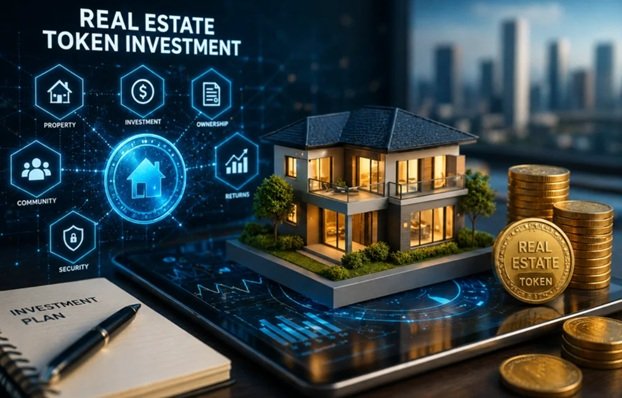
Because these units can be traded on secondary platforms, investors now have the freedom to enter and exit positions with an more flexibility than traditional real estate. Integrating a real estate token investment into a broader financial strategy allows for more dynamic asset management. Instead of having your capital locked away in a single, unmoving asset, you can shift funds between different opportunities as market conditions evolve. This flexibility marks a important change in long-term investing, making the market more efficient and far less dependent on traditional gatekeepers.
The New Standard for the Modern Portfolio
Digital technology is becoming more important in real estate. As we look toward the next decade, the integration of real estate into digital ecosystems will likely move from a emerging trend to the industry standard. The benefits—lower costs, 24/7 access, and total transparency—are simply too compelling for the market to ignore. While this transition will take time to fully mature, those who recognize the value of combining the traditional stability of physical real estate with the efficiency of modern technology will be the ones more prepared for future market changes.
Ultimately, this evolution is about more than just technology; it’s about making the dream of property ownership accessible to everyone. By acknowledging that the old ways of doing business are no longer enough for our fast-paced world, we are creating more accessible investment opportunities for people.